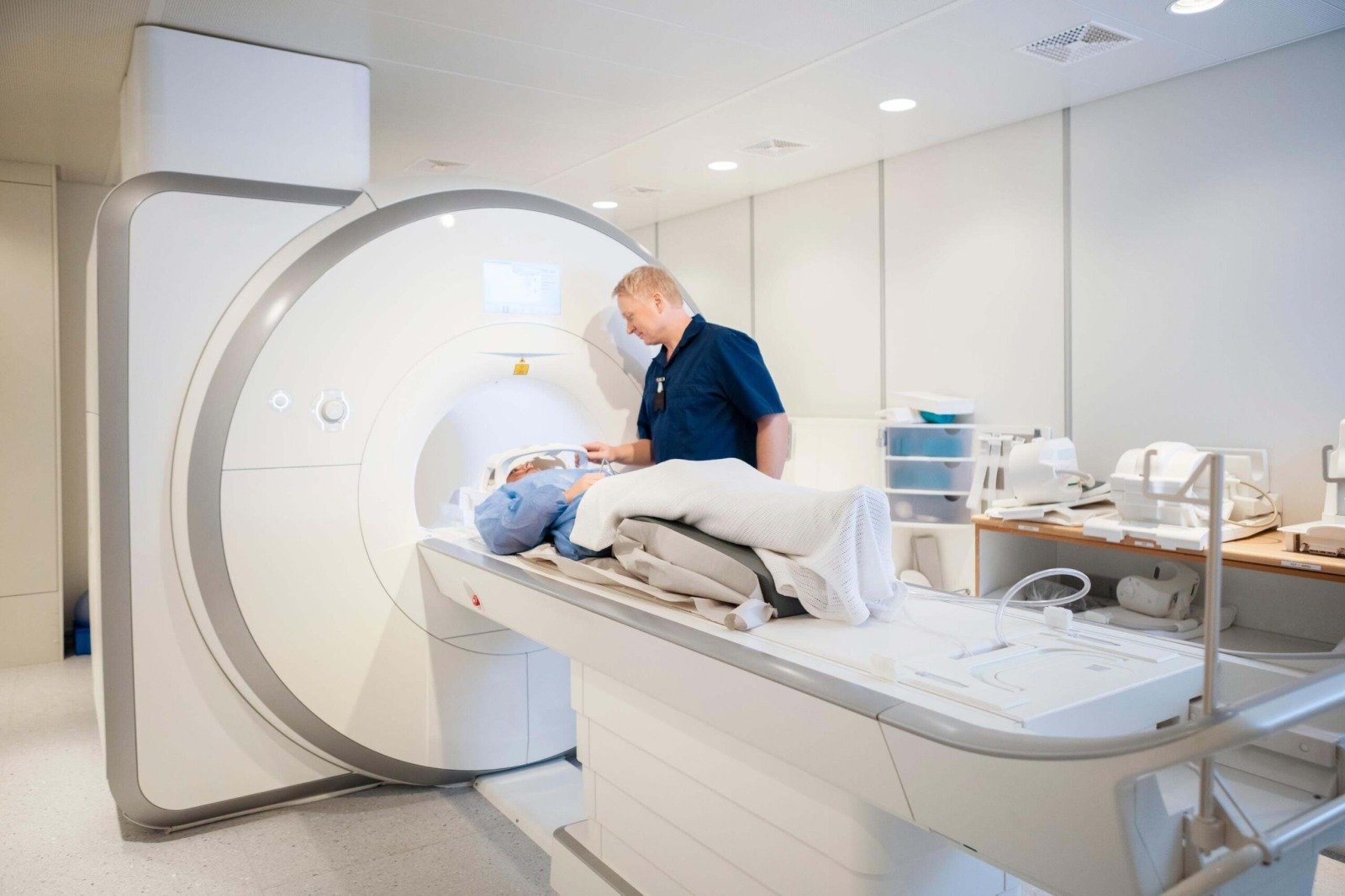
A brain MRI (Magnetic Resonance Imaging) uses strong magnets, radio waves, and a computer to create detailed images of your brain, spinal cord, and surrounding structures, helping doctors diagnose issues like tumors, strokes, infections, multiple sclerosis, and effects of injury, without using radiation. The painless procedure involves lying in a tube, which can be noisy, and may use a contrast dye (gadolinium) for clearer pictures, with results typically available in 1-2 weeks after a radiologist reviews them.